
There’s something deeply comforting about the smell of bread baking — warm honey notes, toasty oats, and that familiar yeasty tang. If you’ve ever wanted a loaf that feels like a hug and also sings with texture, this Honey Oat Sourdough Bread might become your new favorite. It’s forgiving, flavorful, and perfect for morning toast or tearing apart at dinner with olive oil.
Try pairing your fresh loaf with a savory bowl such as Honey Garlic Chicken Bowls for a satisfying dinner.
Why you’ll love this loaf
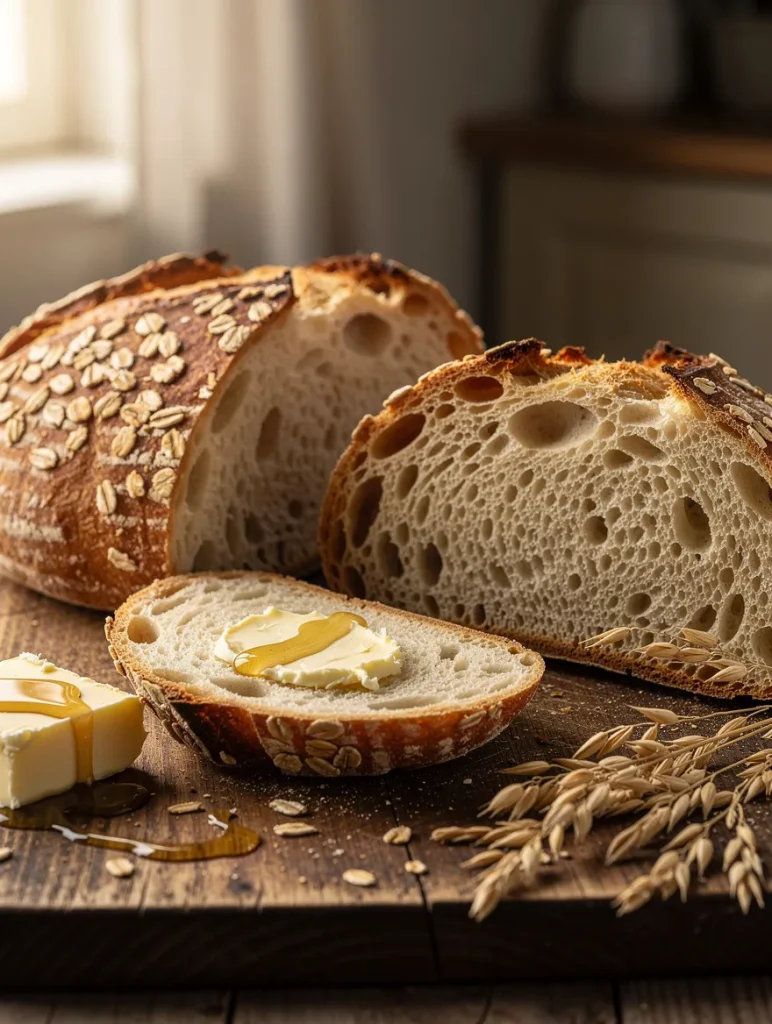
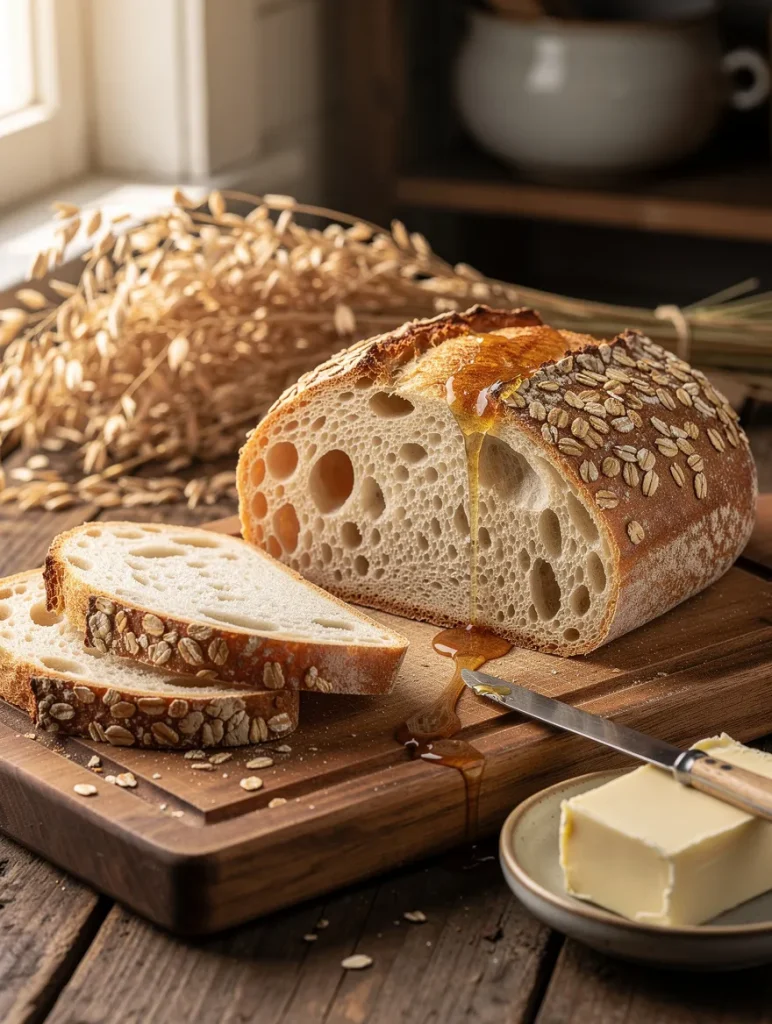
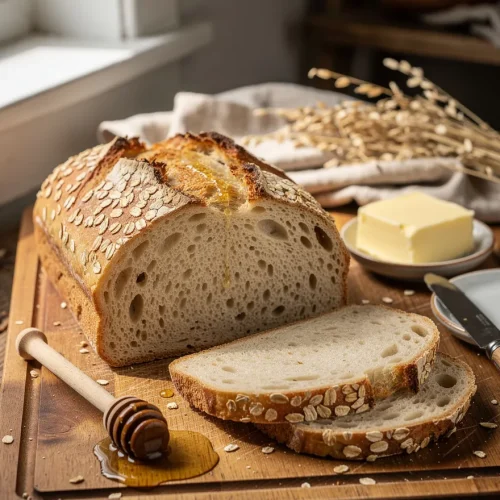
This recipe balances the gentle sweetness of honey with the wholesome chew of rolled oats. The sourdough starter provides a light tang and extended shelf life without overpowering the flavor. You’ll end up with a loaf that has a soft open crumb, a golden oat-studded crust, and just enough honey to make slices sing with butter.
Sourdough Discard Cinnamon Rolls are a great way to use excess starter if you feed before baking.
Ingredients
Everything here is straightforward pantry-friendly. If you keep a fed starter, you’re already most of the way there.
For the starter:
- 50 g active sourdough starter (100% hydration)
- 50 g whole wheat flour
- 50 g water (room temperature)
For the dough:
- 450 g bread flour
- 50 g rolled oats + 20 g for topping
- 320 g water (about 70°F/21°C)
- 10 g fine sea salt
- 30 g honey
- 100 g active starter (after feeding and bubbly)
Optional:
- 1 tablespoon butter or olive oil for brushing after baking
How to Make Honey Oat Sourdough Bread
Follow these stages and don’t rush the fermentation — it’s where flavor and structure develop. Keep an eye on the dough rather than the clock.
1. Feed and prepare your starter (morning)
If your starter has been in the fridge, give it two feedings a few hours apart to bring it to life. You want it bubbly and doubling within 4–6 hours after the last feed.
2. Mix and autolyse (10–20 minutes)
In a large bowl, whisk together the bread flour, 50 g rolled oats, and 300 g of the water. Mix until no dry flour remains. Cover and rest 30–45 minutes — this hydrates the flour and makes the dough easier to develop.
3. Add starter, honey, salt, and remaining water (5 minutes)
After autolyse, dissolve the starter in the remaining 20 g water, then fold it into the dough along with the honey. Sprinkle the salt over the dough and work it in with a few folds. The dough will be sticky and shaggy.
4. Bulk fermentation and stretch-and-folds (3–4 hours room temp)
Let the dough rise at room temperature. Perform a set of stretch-and-folds every 30 minutes for the first 2 hours (4–5 sets). The dough should become smoother and stronger. After the last fold, allow it to rest undisturbed until it’s slightly increased in volume and shows bubbles.
5. Pre-shape and bench rest (15 minutes)
Turn the dough onto a lightly floured surface, shape into a loose round, and let rest 15 minutes to relax the gluten.
6. Final shaping and cold proof (overnight)
Shape the dough into a tight boule or bâtard and place it seam-side up in a well-floured banneton or bowl lined with a towel. Sprinkle the top with the remaining oats and cover. Refrigerate for 8–16 hours — this cold proof develops flavor and makes scoring easier.
7. Bake (35–45 minutes)
Preheat your oven with a Dutch oven or baking stone to 475°F (245°C) for at least 45 minutes. When ready, invert the loaf onto parchment, score, and place into the hot Dutch oven. Bake covered for 20 minutes, then remove the lid and reduce heat to 430°F (220°C) and bake another 15–25 minutes until deep golden and hollow-sounding when tapped.
8. Cool completely
Cool on a rack for at least 2 hours before slicing. It’s tempting to cut sooner, but the crumb finishes setting as it cools.
Notes & Tips
- If you ever find yourself with extra starter discard, consider baking recipes that use discard to avoid waste.
- Brush the loaf with melted butter just after baking for a softer crust and richer flavor.
- For a nuttier note, swap 50 g of the bread flour for whole wheat or spelt.
Serve thick slices beside a saucy entree like Honey Butter Chicken for soaking up every bite.
FAQs
Can I use quick oats instead of rolled oats?
Rolled oats give the best texture. Quick oats will work in a pinch but can become pastier and won’t offer the same chew. If you only have quick oats, reduce the amount by about 20%.
What if my starter isn’t very active?
Use a ripe starter for best rise. If it’s sluggish, give it a couple of warm feedings to revive it. Alternatively, increase the bulk fermentation time; watch the dough, not the clock, for a gentle 30–50% rise and surface bubbles.
How should I store leftovers?
Keep the loaf in a paper bag or bread box at room temperature for 2–3 days. For longer storage, slice and freeze. Toast straight from the freezer for great texture.
Conclusion
Honey Oat Sourdough Bread is one of those loaves that makes a kitchen feel like home. From the slow, rewarding bulk ferment to the satisfying crack of the crust when it comes out of the oven, it’s a project that pays back in warm breakfasts and grateful smiles. Once you’ve mastered this basic formula, you can tweak oats, flours, and honey levels to make it your own.
Slice it thick, toast it slowly, or tear it while it’s still warm — and enjoy the small joy of homemade bread.
Honey Oat Sourdough Bread
Ingredients
Starter
- 50 g active sourdough starter 100% hydration
- 50 g whole wheat flour
- 50 g water room temperature
Dough
- 450 g bread flour
- 50 g rolled oats
- 320 g water
- 100 g active starter bubbly and fed
- 30 g honey
- 10 g fine sea salt
- 20 g rolled oats for topping
Optional
- 1 tablespoon melted butter or olive oil for brushing
Instructions
- Feed your starter early so it’s active and bubbly when you mix the dough. Aim for a starter that doubles within 4–6 hours.
- Mix bread flour, 50 g oats, and 300 g water until no dry flour remains. Cover and rest 30–45 minutes.
- Dissolve the starter in the remaining water, add to the dough with honey, and sprinkle in the salt. Fold until incorporated.
- Perform stretch-and-folds every 30 minutes for 2 hours (4–5 sets). Then let the dough rest until slightly increased in volume and bubbly (about 1–2 more hours).
- Turn dough onto floured surface, shape into a loose round, and rest 15 minutes to relax.
- Shape into a tight boule or bâtard, place in a floured banneton seam-side up, sprinkle with oats, and refrigerate 8–16 hours.
- Preheat Dutch oven to 475°F (245°C). Invert loaf onto parchment, score, and bake covered 20 minutes. Uncover, reduce oven to 430°F (220°C), and bake 15–25 minutes more until deeply golden.
- Cool on a rack at least 2 hours before slicing to allow the crumb to finish setting.
Notes
If your starter is sluggish, give it warm feedings or lengthen bulk fermentation.
Freeze slices for longer storage; toast directly from frozen.