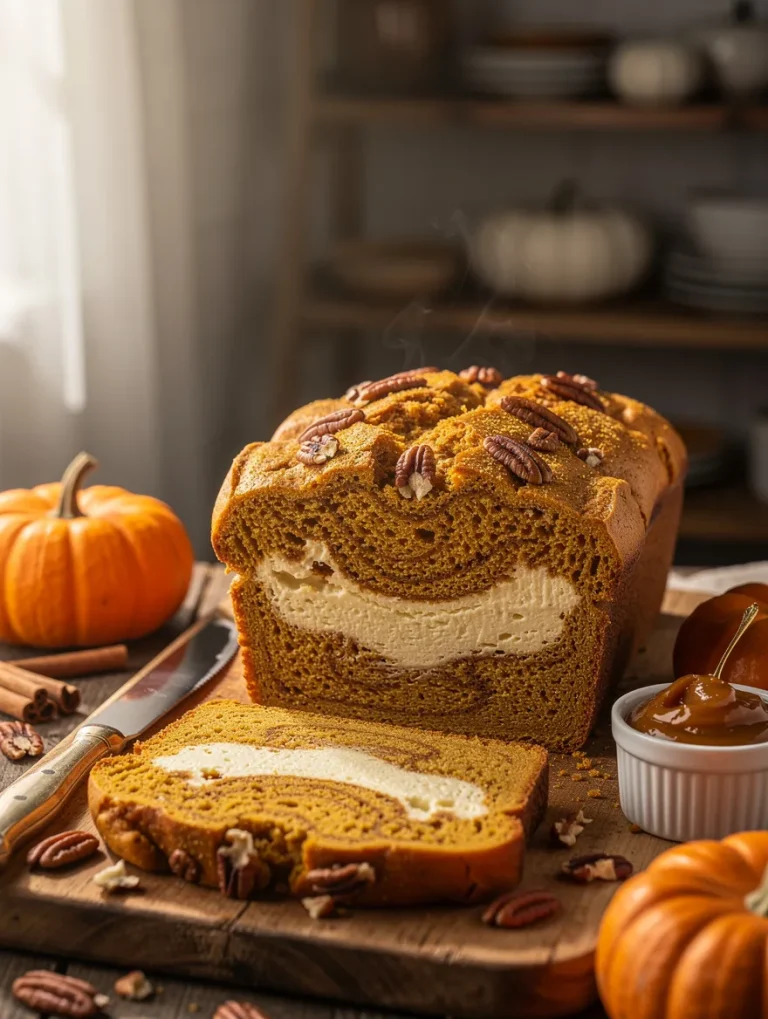
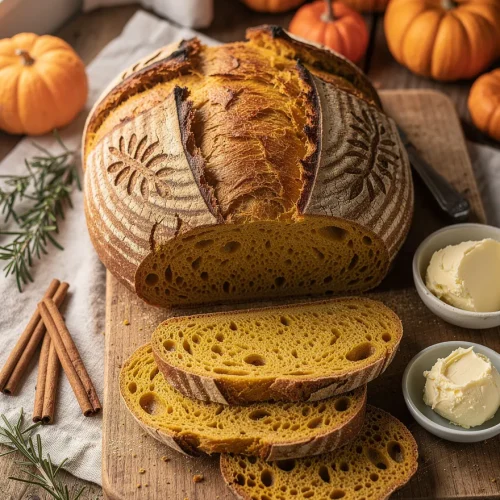
There’s something about the smell of warm spices and baking bread that feels like home — the kind of comfort that makes you slow down and take a deep breath. If you’ve been wanting to bake something seasonal that still showcases your sourdough starter, this pumpkin sourdough bread is exactly that: cozy, slightly tangy, and wonderfully soft inside with a crackly crust. You’ll want to slice it warm and pretend you didn’t just eat half the loaf. If you’re feeding a crowd, you can stretch your starter and try Sourdough Discard Hamburger Buns.
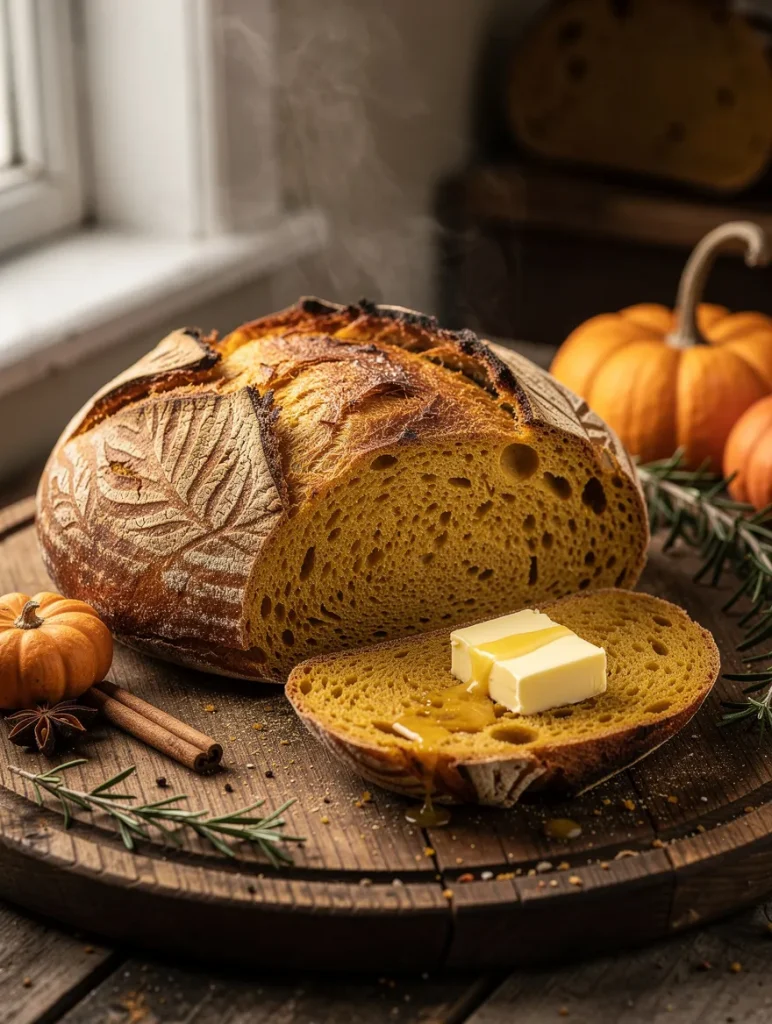
Why you’ll love this pumpkin sourdough bread
This recipe balances the earthiness of pumpkin with a touch of warm spices and a gentle sourdough tang. It’s not overly sweet, so it works for breakfast toast, sandwiches, or alongside soup. The trick is to treat the pumpkin like part of your hydration — it adds moisture and flavor without overpowering the starter.
If you love experimenting, try Sourdough Pumpkin Muffins next to your morning coffee.
Ingredients
These ingredients make one medium loaf (about 8–9 inches). We use baker’s grams for accuracy, with approximate cup equivalents if you prefer.
- 500 g bread flour (about 4 cups)
- 100 g whole wheat flour (about 3/4 cup)
- 200 g active sourdough starter (fed and bubbly)
- 150 g canned or cooked pumpkin puree (about 2/3 cup)
- 260 g water, room temperature (about 1 cup + 2 tbsp)
- 10 g fine sea salt (about 1 3/4 tsp)
- 50 g brown sugar (about 1/4 cup) — optional for slight sweetness
- 1 tsp ground cinnamon
- 1/2 tsp ground nutmeg
- 1/4 tsp ground ginger
- Optional: 1/4 cup chopped toasted walnuts or pepitas, for texture
How to Make Pumpkin Sourdough Bread
Plan ahead: active starter and time for fermentation are essential. This method gives you a predictable schedule and a flavorful loaf.
1. Feed and prepare your starter
4–8 hours before you mix (depending on room temp), feed your starter so it’s bubbly and at peak. You want it active — it should double or show lots of bubbles.
2. Mix the dough
In a large bowl, whisk together the flours, cinnamon, nutmeg, ginger, and brown sugar. In a separate bowl, combine the pumpkin puree and water until smooth. Add the active starter to the pumpkin mixture, then pour the wet into the dry. Mix with a spatula until no dry flour remains; dough will be shaggy. Sprinkle salt over the dough and incorporate by folding — don’t worry about perfect kneading.
3. Bulk fermentation with stretch-and-folds
Let the dough rest for 30 minutes (autolyse). Then perform 3–4 sets of stretch-and-folds every 30 minutes: grab a side of the dough, stretch it up, and fold it over itself. After the last fold, leave the dough to bulk ferment at room temperature until it rises ~30–50% and shows airy bubbles — usually 3–5 hours depending on warmth.
4. Shape and cold proof
Turn the dough onto a lightly floured surface, gently degas, and shape into a tight boule or batard. Place seam-side up in a floured banneton or a bowl lined with a towel. Cover and refrigerate for 8–18 hours for an easier schedule and more developed flavor.
5. Bake
Preheat your oven to 475°F (245°C) with a Dutch oven inside for at least 45 minutes. When ready, carefully invert the dough onto parchment, score with a sharp blade, and transfer to the hot Dutch oven. Bake covered for 20 minutes, then remove the lid, reduce temp to 425°F (220°C), and bake another 20–25 minutes until deeply golden and crusty. Internal temperature should reach about 205–210°F (96–99°C).
6. Cool and enjoy
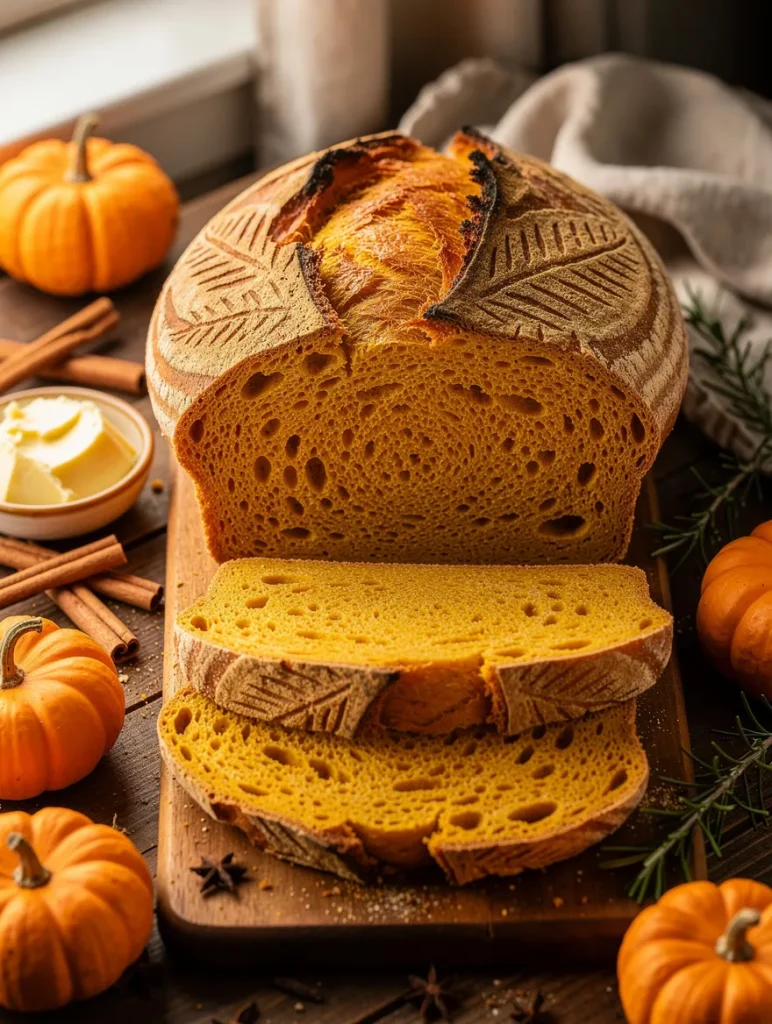
Let the loaf cool on a wire rack for at least 1 hour before slicing — I know it’s tempting, but cooling finishes the crumb and keeps slices from becoming gummy.
Tips and variations
- If you have extra starter, you can use discard recipes during the same baking day for minimal waste.
- For a nuttier loaf, fold in toasted walnuts or pepitas during the last fold.
- Use brown butter instead of plain water for a richer flavor — reduce water slightly if you try that.
- If your kitchen is cold, extend bulk fermentation or proof in a slightly warm spot (not hot) to avoid over-proofing.
- For a savory pumpkin twist, check out Pumpkin Sage Gnocchi as another fall favorite.
FAQs
Can I use pumpkin pie filling instead of pumpkin puree?
Don’t use pie filling — it’s sweetened and spiced. Use plain pumpkin puree so you control the amount of sugar and spices.
What if my starter isn’t very active?
Either feed it and wait until it’s bubbly before mixing, or use less starter and extend bulk fermentation and proof times. A sluggish starter means longer fermentation, not a failed loaf.
How sweet is this bread?
It’s mildly sweet thanks to the brown sugar; you can omit or reduce the sugar for a savory loaf that pairs well with soups and cheeses.
Can I use this recipe with sourdough discard?
Yes — you can convert to a discard method by reducing fresh starter and increasing fermentation time or trying one of the many discard recipes for smaller bakes.
Conclusion
Making pumpkin sourdough bread is one of those baking projects that rewards patience and smells amazing for hours. Once you get the rhythm of feeding, folding, and cold-proofing down, it becomes a delightful ritual — especially as the weather cools. Slice it thick with butter, use it for hearty sandwiches, or toast it and top with cream cheese and a drizzle of honey. Baking is personal, so tweak the spices and add-ins until the loaf feels like yours.
Happy baking — and don’t be surprised if everyone asks for seconds. Use leftover discard to make Sourdough Discard Cinnamon Rolls for an easy sweet treat.
Pumpkin Sourdough Bread

Ingredients
Main dough
- 500 g bread flour about 4 cups
- 100 g whole wheat flour about 3/4 cup
- 200 g active sourdough starter fed and bubbly
- 150 g pumpkin puree about 2/3 cup
- 260 g water about 1 cup + 2 tbsp
- 10 g fine sea salt about 1 3/4 tsp
Flavoring
- 50 g brown sugar about 1/4 cup — optional
- 1 tsp ground cinnamon
- ½ tsp ground nutmeg
- ¼ tsp ground ginger
- ¼ cup toasted chopped walnuts or pepitas Optional
Instructions
- Feed your starter 4–8 hours before mixing so it’s active and bubbly.
- Whisk together bread flour, whole wheat flour, cinnamon, nutmeg, ginger, and brown sugar in a large bowl.
- Mix pumpkin puree and water until smooth, then stir in the active starter. Pour wet into dry and mix until just combined.
- Let the shaggy dough rest 30 minutes, then sprinkle salt and fold to incorporate.
- Perform 3–4 sets of stretch-and-folds every 30 minutes, then leave the dough to rise at room temperature until 30–50% increased in volume (3–5 hours).
- Shape into a tight boule or batard, place seam-side up in a floured banneton, cover and refrigerate 8–18 hours.
- Preheat oven to 475°F (245°C) with a Dutch oven inside. Flip dough onto parchment, score, and bake covered 20 minutes; uncover, reduce to 425°F (220°C) and bake 20–25 more minutes until golden and internal temp ~205–210°F.
- Cool on a wire rack at least 1 hour before slicing.
Notes
- If you prefer less sweetness, reduce or omit brown sugar.
- Add nuts or seeds during the last fold for texture.
- If your starter is slow, increase fermentation time rather than speeding the heat.